Release Liner: PET or Paper — What the Choice Changes
- Share
- Issue Time
- Nov 22,2026
Summary
PET film or glassine paper: what the liner changes in die-cutting, peel feel and cost, and the five lines to put on a purchase order.
Two patches can leave the same coating line with identical hydrocolloid and still feel like different products in the customer's hand. The difference is often the liner — the sheet the patch sits on until someone peels it off.
Buyers rarely specify the liner. They specify the patch. Then a sample arrives that curls at the edges, or a sheet that will not release cleanly on a humid filling line, and the liner becomes the conversation. This article covers what the choice actually changes, and what to write on a purchase order so you get the one you tested.
What the liner does, and what it does not do
The liner is a carrier. It holds the adhesive face flat and protected between coating and the moment of use, and it has to release without dragging the adhesive with it. That is the whole job.
It does not absorb exudate, it does not control wear time, and it does not set shelf life. Those belong to the hydrocolloid mass and the pouch. Teams that try to solve a lift complaint by changing liner usually come back with the same complaint and a new die-cutting problem.
The release layer is a coating, not a separate part. PET and glassine differ in the carrier underneath it — and that is where the handling differences come from.
PET film and glassine paper, compared on what buyers notice
| Dimension | PET film liner | Glassine paper liner |
|---|---|---|
| Peel feel | Stiff, releases with a short clean snap; the sheet stays flat as you pull | Softer, peels with a light drag; the sheet can follow your fingers |
| Dimensional stability | Barely moves with humidity; registration holds through the press | Takes on moisture and relaxes; small shapes drift during long runs |
| Die-cutting | Tighter nesting on small and irregular outlines, because the web does not stretch | Workable on standard round dots; needs more margin on thin bridges and character shapes |
| Static and dust | Builds static; sheets can cling in dry rooms and attract dust before packing | Low static, but fibres and paper dust appear at the cut edge |
| Humidity in the fill room | Largely indifferent, which helps where the room is not tightly controlled | Curling at the corners is the first symptom; release can tighten or loosen |
| Cost per square metre | Higher than glassine at equal width — the gap is quoted per project, not published | The lower-cost route, and the reason it is the default on high-volume round dots |
| Where it usually wins | Custom shapes, printed patches, thin gauges, anything with a narrow bridge | Standard circles at volume, cost-led programmes, simple rectangular packs |
How the liner changes die-cutting more than people expect
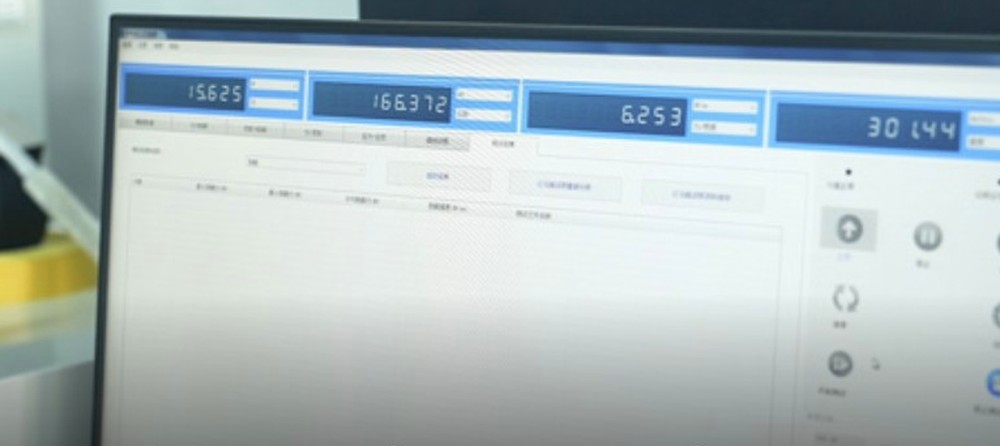
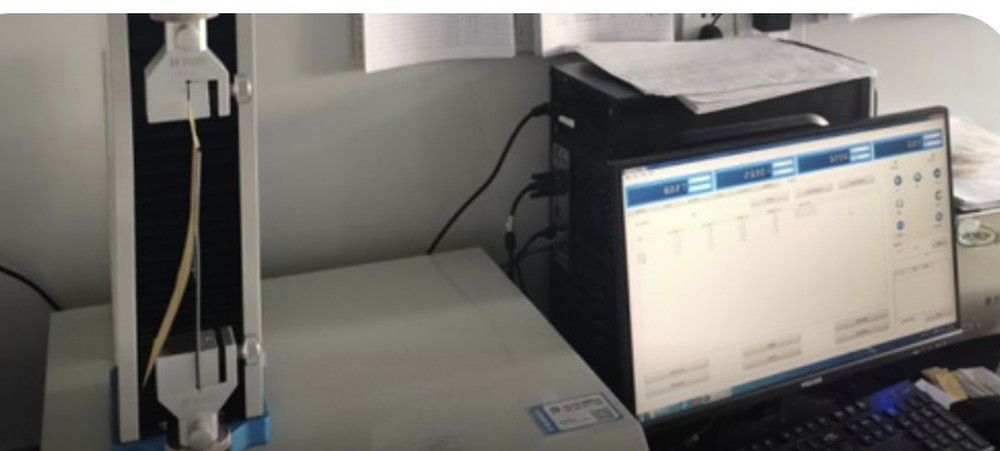
Release force is read off a test stand, not judged by hand. The number is what goes on the specification — the feel in a customer's fingers is a consequence of it.
A die line is drawn to a tolerance. When the carrier stretches, the tolerance has to absorb that movement, and the only place to take it from is the gap between adjacent patches. On a sheet of 12 mm dots this is invisible. On a character shape with a 2 mm ear, it decides whether the ear survives the cut.
This is why the same artwork can be quoted at two different nestings, and why a supplier who changes liner without telling you has quietly changed your yield per sheet. If a quote looks unusually good on a custom shape, ask which liner it assumes.
The retail complaint that is really a liner problem
"The patch folded onto itself when I tried to peel it." That review appears on listings with perfectly good hydrocolloid. It usually means the liner was too floppy for the patch geometry, so the patch bent before it cleared the sheet.
The fix is not more adhesive. It is either a stiffer carrier or a deeper kiss-cut that gives the patch a clean perimeter to lift from. Both are specification decisions made before the first run, which is why they are worth settling at sample stage rather than after a launch.
What to write on the purchase order
- Carrier type and gauge — "PET film, 75 µm" or "glassine, 62 gsm", not "release liner".
- Release force target — the value your filling line and your customer's fingers both accept, stated with the test method.
- Kiss-cut depth — through the patch, into but not through the liner.
- Sheet dimension and nesting — the layout the price was calculated on.
- Humidity assumption — the condition your packing room holds, so the supplier can flag a liner that will not behave there.
None of these are exotic. They are simply the five lines that stop a re-run.
Where this sits in the wider specification
Liner choice is one of four decisions that travel together: mass thickness, adhesive, liner, and pouch. Change one and the others usually need a look. The hydrocolloid patch specification overview covers how they interact, and the shelf-life question — which the liner does not answer — is handled separately in what shortens a hydrocolloid patch's shelf life.
If adhesive behaviour is the part you are trying to pin down, peel, shear and residue on oily skin covers the test side rather than the carrier side.
Running a custom shape and unsure which liner your die line assumes?
Send the artwork and the pack format. We will come back with the nesting, the carrier the quotation is based on, and a sample in 7 days from final artwork. Minimum order is 1,000 units per design.