Pimple Patch Myths That Cost You Sales
- Share
- Issue Time
- Aug 13,2025
Summary
Most pimple patch myths are half true, which is why they survive. Six claims, and the version of each a customer can actually verify.
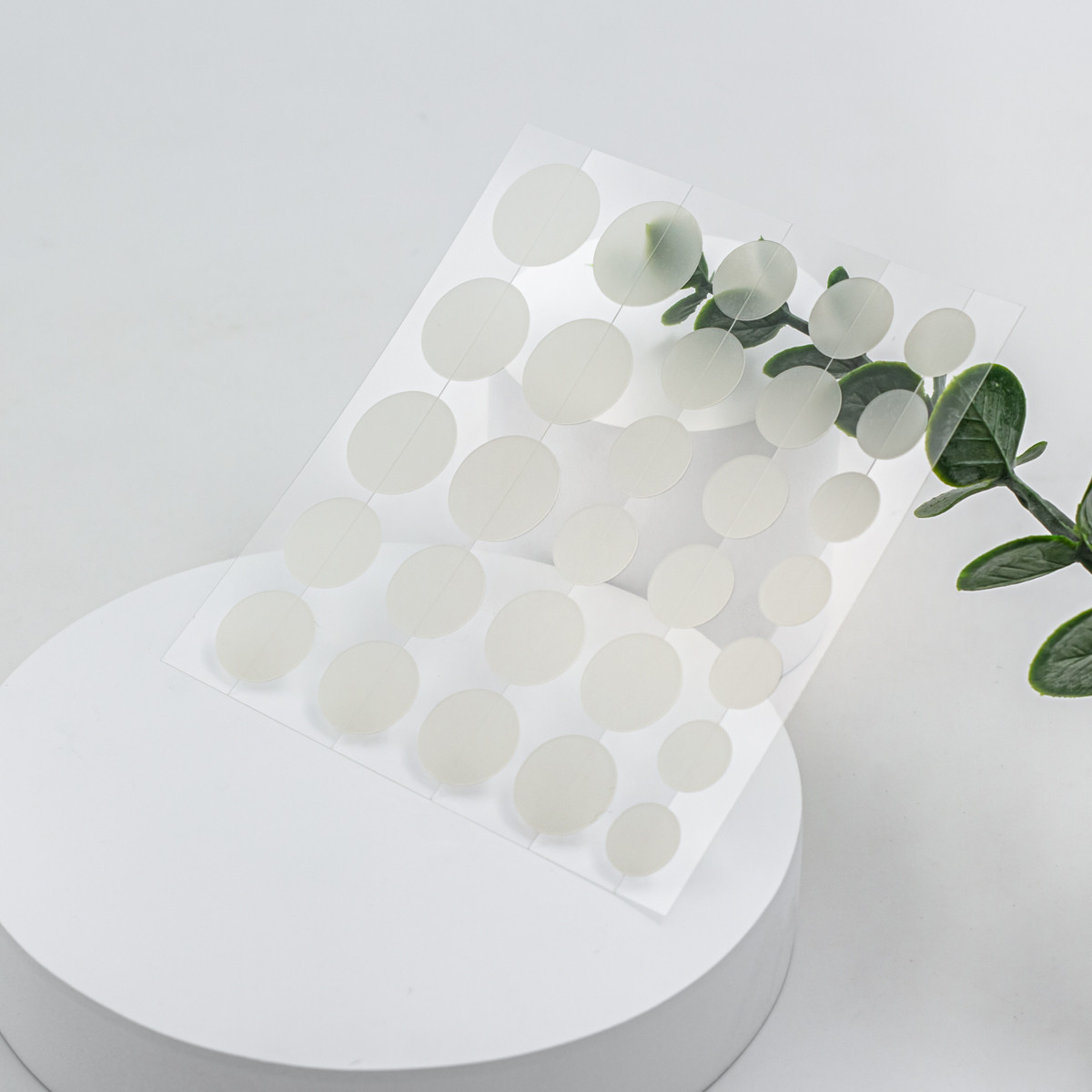
Most pimple patch myths are half true, which is why they survive. The patch does absorb fluid; it just does not do it on a closed spot. Correcting the half that is wrong is what keeps customers — and what keeps a brand out of a returns spiral.
Six claims that come up constantly, and the version of each that a customer can actually verify.
1. "It pulls the pus out"
The white swelling is hydrocolloid that has absorbed surface fluid, held inside the patch. On an open blemish there is fluid to take up; on a flat, closed one there is not, and the patch will look unchanged. Saying this on the pack prevents the review that says "it did nothing".
2. "It works overnight on any spot"
It works best where the skin is already broken or weeping, and least on a deep, closed cyst. A patch is a cover and an absorber, not a treatment that reaches underneath.
3. "The bigger the patch, the better"
Size is about coverage and adhesion, not strength. A patch much larger than the blemish sits on more curved skin, lifts sooner, and delivers less. Matching the patch to the spot beats upsizing.
4. "You can put it over your serum"
You cannot. Serum, moisturiser or oil under the patch is a release layer — the adhesive never bonds to skin, and the patch slides within the hour. Clean, dry skin is the whole instruction.
5. "All patches are the same"
Three things vary widely: thickness, adhesive grade and absorption capacity. They decide whether the patch stays on and how much it holds. A cheap patch that lifts at hour two is more expensive per use than one that lasts the night.
6. "It will stop scarring"
Not established, and a risky thing to print. What a patch does is reduce picking and friction, which is a plausible reason a spot heals less angrily — but "prevents scars" is a claim no dressing can support on a consumer pack.
How to use one properly
- Cleanse with water or a mild cleanser and let the skin dry fully.
- Apply to bare skin, with no product underneath.
- Choose a patch slightly larger than the blemish.
- Press for ten seconds, especially at the edges.
- Leave it for the stated wear time — usually overnight.
If it still lifts, the problem is usually the first two steps rather than the patch. For the full diagnosis, see why acne patches lift.
Want copy that matches what the product can do? Send us the pack text you are planning and we will flag the lines that will come back as returns.
Request a quote