Loading a Microdart Patch: Which Actives Survive Manufacture
- Share
- Issue Time
- Feb 5,2026
Summary
A water-soluble matrix rules out as much as it enables. Solubility, drying and storage decide which actives can be carried and measured.
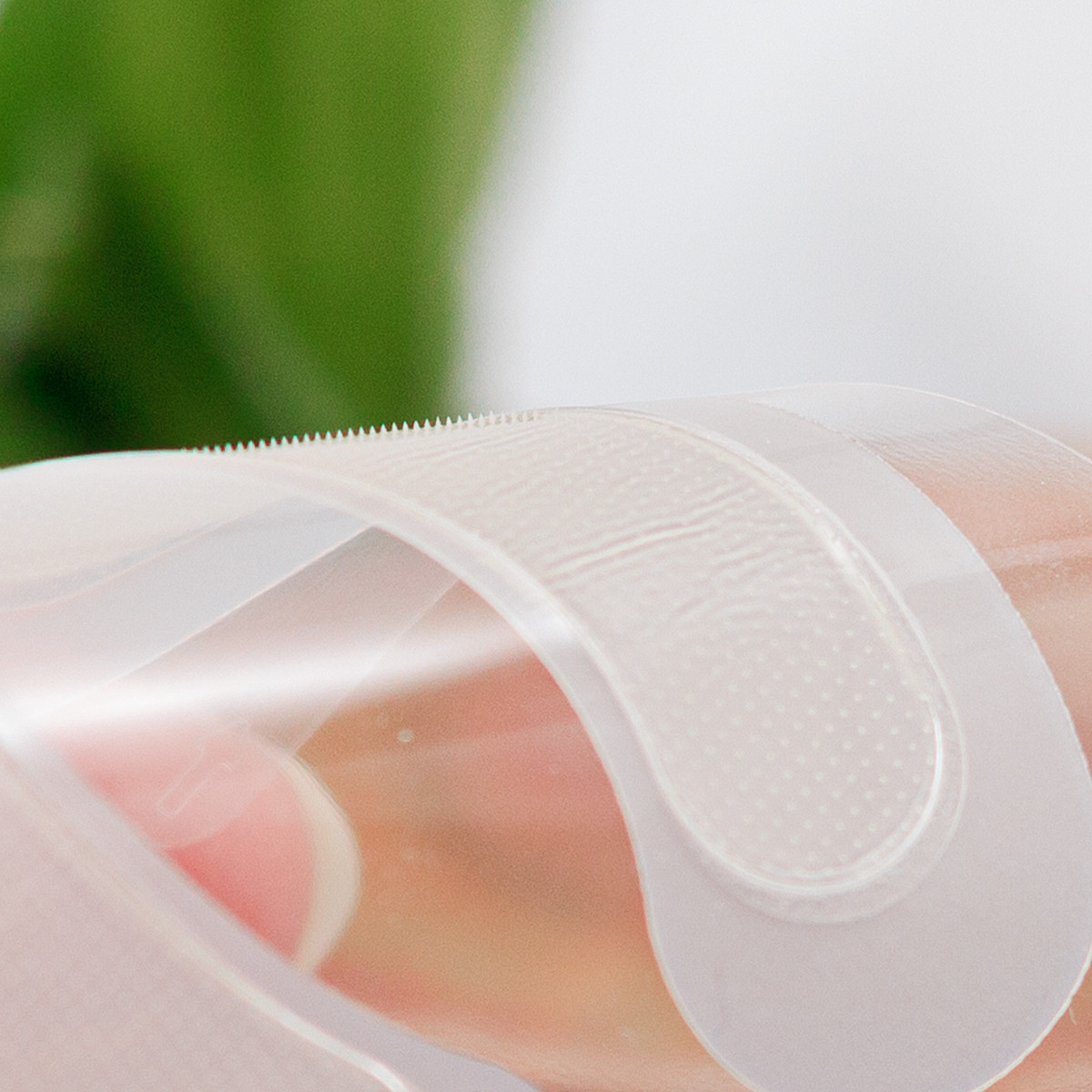
Not every active survives being dissolved, moulded, dried and stored. A microdart patch is a water-soluble matrix, which rules out as much as it enables — and the ingredient list on a competitor's pack is not proof that the ingredient is still active in theirs.
Formulation for this format is a set of constraints, not a wish list. Understanding the constraints explains why the category converges on a small number of actives, and why some ingredient lists look impressive but deliver little.
Three constraints
can it be carried
The matrix is aqueous during filling. An active that does not dissolve stays as particles, which clog cavities and give an uneven dose. Oil-soluble actives are difficult here without an emulsification step.
does it survive heat
Water has to leave. Anything heat-sensitive degrades in proportion to how long the drying takes — and slow drying is exactly what a delicate formulation needs.
does it hold
A dry matrix is hygroscopic. Over shelf life it takes up moisture from the pack, and some actives hydrolyse or oxidise once that happens.
What the constraints allow
In practice the format favours humectants and small, stable, water-soluble molecules: hyaluronic acid for matrix behaviour rather than for a claim, niacinamide, and low-pH acids handled carefully. Botanicals are harder: extracts are mixtures, and a mixture cannot be dosed precisely or measured per batch.
The commercial consequence is that a long ingredient list is usually a short specification. Nine botanicals at unspecified levels cannot be tested; one named compound at a stated dose can. When a competitor lists a dozen actives, the useful question is which one has a number attached.
Dose versus stability
More active is not automatically better. Higher load can slow drying, weaken the dart, or push the formulation out of its stable pH range. There is a practical ceiling per patch, and it is discovered during development rather than assumed from a marketing target.
What to test, and on which pack
Assay at release, assay at end of shelf life, and moisture uptake — all on the pack you will actually ship. A stability result from a different pouch is not transferable, because the barrier is what determines the water content, and water content determines whether the active is still there in month eighteen.
Ask also for the marker compound used in batch testing. A blend has no identity; a named compound does, and it is the only way a buyer can verify a shipment.
For how the array is built, see moulding and dose control; for whether the format is worth its cost, see reading the evidence.
Send the actives and the doses you want and we will tell you which ones the matrix can carry, which ones need to move to a different construction, and what the drying step will cost.
Request a quote