Labelling by Market: US, UK and EU
- Share
- Issue Time
- Nov 28,2026
Summary
One pack, three rulebooks. What the US, EU and UK each require on a cosmetic label — and the single decision that has to be made before the dieline is signed.
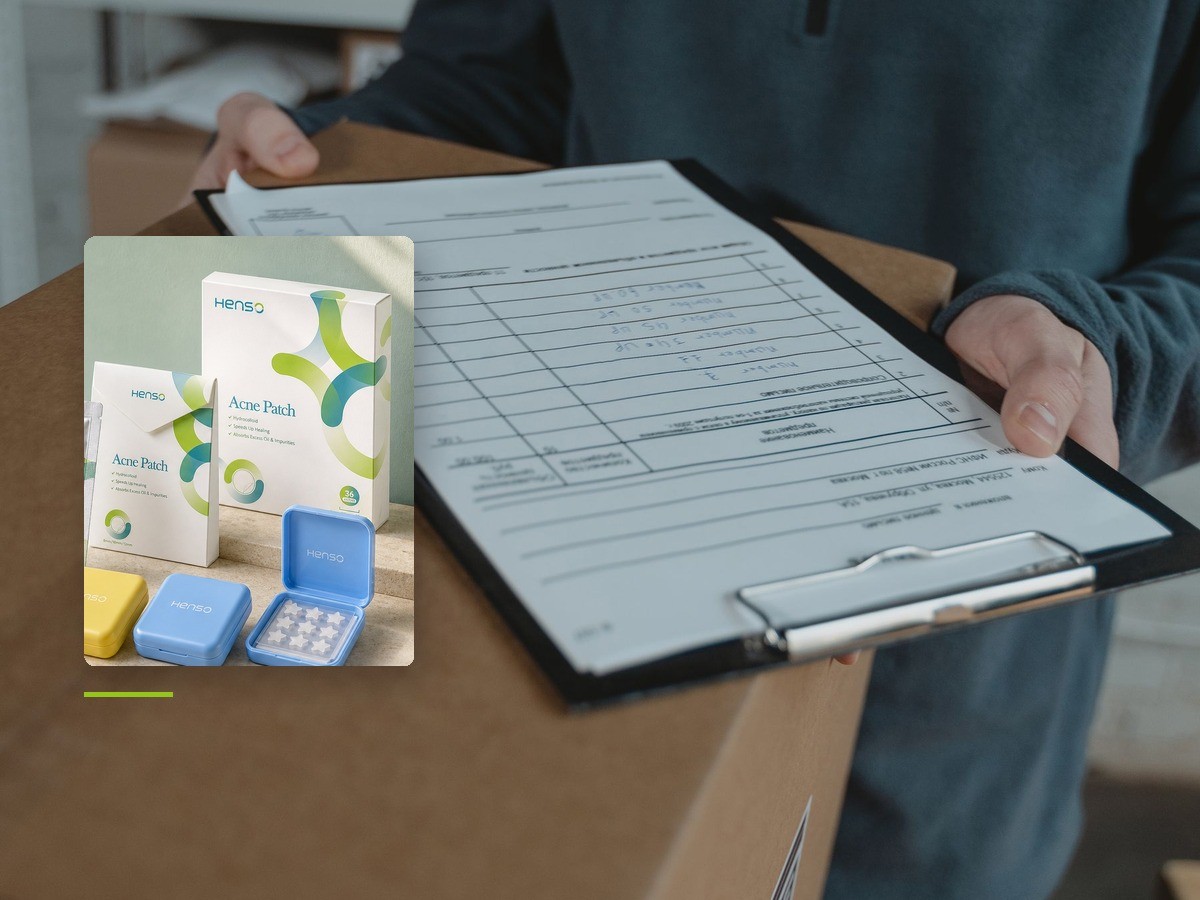
The same 36-count pouch can be sold in Los Angeles, Manchester and Hamburg — but not with the same artwork. Three regulators ask for three different sets of particulars, and the one item that most often holds up a launch is not the formula. It is the address printed on the back.
This is a working summary of what each market expects on an acne patch pack: what has to be printed, where it goes, and which decisions have to be made before the dieline is final. It is written for brands and distributors specifying private-label hydrocolloid acne patches, where pack space is small and every line of type competes with the product window.
Start with the claim, because the claim picks the rulebook
Before labelling, a pack has to answer one question: is this a cosmetic, a drug, or a medical device? The answer is not set by the material — it is set by what the pack says the product does.
| What the pack claims | United States | EU / UK |
|---|---|---|
| Covers, conceals, absorbs exudate, improves the look of a blemish | Cosmetic — 21 CFR 701 labelling applies | Cosmetic — Regulation 1223/2009 Article 19 applies |
| Treats, clears or prevents acne | Drug. An acne claim puts the product under the OTC acne monograph unless another pathway applies | Likely a medicinal product or a medical device, depending on mode of action — a different regime entirely |
| Sterile, or for use on broken skin after a procedure | Usually a device; wound-dressing rules apply | Medical device under MDR — CE marking, not a cosmetic label |
Most private-label acne patches sit in the first row, and that is the assumption for the rest of this article. The moment a brand wants "treats acne" on a pack, the conversation changes from artwork to a regulatory submission, and no amount of label design will substitute for that.
United States: 21 CFR 701, plus what MoCRA added
US cosmetic labelling is built on two panels. The principal display panel is the face the shopper sees: it must carry the identity of the product and a net quantity statement, placed in the lower third and parallel to the base of the pack. Everything else lives on an information panel.
The information panel carries four things that are routinely missed on small pouches:
- The firm's name and place of business — street address, city, state and ZIP. If a distributor is named rather than the manufacturer, the label must say so: "Manufactured for …" or "Distributed by …".
- The ingredient declaration — INCI names in descending order of predominance, with colour additives and ingredients at 1% or less allowed in any order. Type size is regulated: not less than 1/16 inch, dropping to 1/32 inch only when the total labelling surface is under 12 square inches. A 36-count pouch is usually in that smaller bracket.
- English — all required statements must appear in English, prominent enough to be read at purchase.
- Country of origin — required on imported articles under the Tariff Act.
MoCRA added a layer on top of the 21 CFR text. A cosmetic now needs a named responsible person, and the label must give a domestic address, phone number or electronic contact through which that person can receive adverse event reports. Facility registration and product listing sit behind that, in the FDA's systems rather than on the pack — but the contact route has to be printed.
Practical note for a small pouch: the 12 square inch threshold is what makes or breaks US artwork. Below it, ingredient type can be 1/32 inch, which is the difference between fitting the declaration on the back panel and moving it to a folded leaflet.
European Union: eight particulars under Article 19
Regulation (EC) No 1223/2009 is more prescriptive than the US framework, and it is a closed list. Every cosmetic placed on the EU market must show the following, in a language easily understood in the member state of sale:
| # | Particular | Where it usually goes | Common failure |
|---|---|---|---|
| 1 | Name and address of the responsible person in the EU | Back panel, above the ingredient list | Only the non-EU manufacturer is named |
| 2 | Nominal content by weight or volume at the time of packing | Front or back, near the count | Count given ("36 patches") with no net weight |
| 3 | Date of minimum durability, or the period-after-opening symbol | Back panel, next to the batch | Both printed, contradicting each other |
| 4 | Precautions for use, plus any special precautions from the Annexes | Back panel, below directions | Warnings inherited from a different SKU |
| 5 | Batch number or reference that identifies the batch | Crimp, gusset or lower back panel | Printed on the carton only, not the pouch |
| 6 | Function of the product, unless obvious from the presentation | Front panel | "Patches" alone on a pack that shows no use |
| 7 | Ingredient list in INCI nomenclature | Back panel | Trade names instead of INCI |
| 8 | Country of origin, for imported products | Back panel | Omitted because "Made in China" is on the shipper |
Two of these have consequences that reach further than the artwork. The responsible person is a legal entity established in the EU, and their address on the pack is the address a market surveillance authority will write to. The batch reference is what makes a recall possible, which is why it has to be on the primary pack rather than only on the outer carton.
Separately from the label, the EU regime requires notification of the product in the CPNP database before it is placed on the market, and a product information file kept available for inspection. Neither appears on the pack, and both are usually the brand's obligation rather than the factory's.
United Kingdom: same skeleton, different attachments
Great Britain retained the substance of 1223/2009 after 2021, so the eight particulars above still describe a compliant GB label. What changed is who is named. A GB pack needs a UK responsible person with a UK address; an EU address alone is not sufficient for products placed on the GB market.
Notification moved with it. Instead of CPNP, GB products are notified through the UK's Submit Cosmetic Product Notification service. Practically, a brand entering both markets needs two named entities, two notifications, and a label that carries whichever address matches the pack's destination — or two artwork versions, which is usually cleaner than trying to print both.
The particulars overlap; the address block does not. Plan a separate back panel per market rather than one panel trying to serve all three.
Three back panels, one physical pack
United States
- Principal display panel: identity + net quantity, lower third, parallel to the base
- Firm name and US address, or "Manufactured for…" / "Distributed by…"
- INCI list in descending order, 1/16 in (1/32 in under 12 sq in)
- Country of origin; adverse-event contact route
European Union
- EU responsible person, with a European address
- Nominal content at the time of packing
- Minimum durability date or PAO symbol
- Precautions for use; batch reference; function, INCI, origin
Great Britain
- UK responsible person, with a UK address
- The same eight particulars as the EU list
- SCPN notification instead of CPNP (not printed on the pack)
The particulars overlap; the address block does not. Two artwork versions is usually cheaper than a joint label that satisfies neither.
What this means before the dieline is signed
Label decisions are cheap at brief stage and expensive after cylinders are cut. Five items are worth locking before artwork:
- Market list, not market guess. "US first, EU next year" changes the back panel. Decide which packs need which address block now, because the space has to exist on the dieline even if the address is added later.
- Claim wording. Cosmetic language keeps the product in a labelling regime; treatment language moves it into a submission. Write the claim before the copy deck is designed around it.
- Label surface area. Under 12 square inches, US ingredient type can drop to 1/32 inch, which buys roughly a third more lines. Measure the actual printable area, not the pouch size.
- Batch marking method. Inkjet on a crimp, laser on a gusset, or a printed batch in the artwork — each has a cost and a legibility profile that a surveillance inspector will judge on a shelf, not on a proof.
- Who is named. The responsible person or UK responsible person is a commercial arrangement as much as a legal one. It has to be in place before the artwork goes to print, not after.
Where brands get caught
In practice, the rejections we see are rarely about the formula. They are about the pack doing two jobs at once: an Amazon listing that needs a scannable code and a net quantity, and a retail pack that needs warnings and traceability. A pack designed for the first and audited against the second will fail on the same three points every time — missing batch reference on the primary pack, no named in-market entity, and a net quantity that states a count without a weight or volume.

The case label, not the proof on screen, is what an inspector reads first. Batch reference, a net quantity with a unit, and a named party in the destination market are the three items that decide whether a shipment is accepted.
None of that is a reason to redesign the product. It is a reason to settle the label with the same rigour as the specification, and to do it while the artwork is still a file rather than a print run.
Planning a private-label range for more than one market?
We produce invisible hydrocolloid patches, custom shaped patches and dissolving microneedle patches under ISO 13485, and we quote label and pack formats alongside the patch specification. Send the markets you are targeting and we will come back with the artwork constraints for each — including where the address block has to sit.
This article is a working summary for specifiers and is not legal advice. Classification and label content should be confirmed with a regulatory consultant for each market before a pack is printed.