Decorative Acne Patches: Why They Sell and What They Cost
- Share
- Issue Time
- Aug 5,2025
Summary
A decorative patch makes a blemish deliberate instead of hidden. Why the category exists, what shapes and print add in tooling, and how to test a shape cheaply.
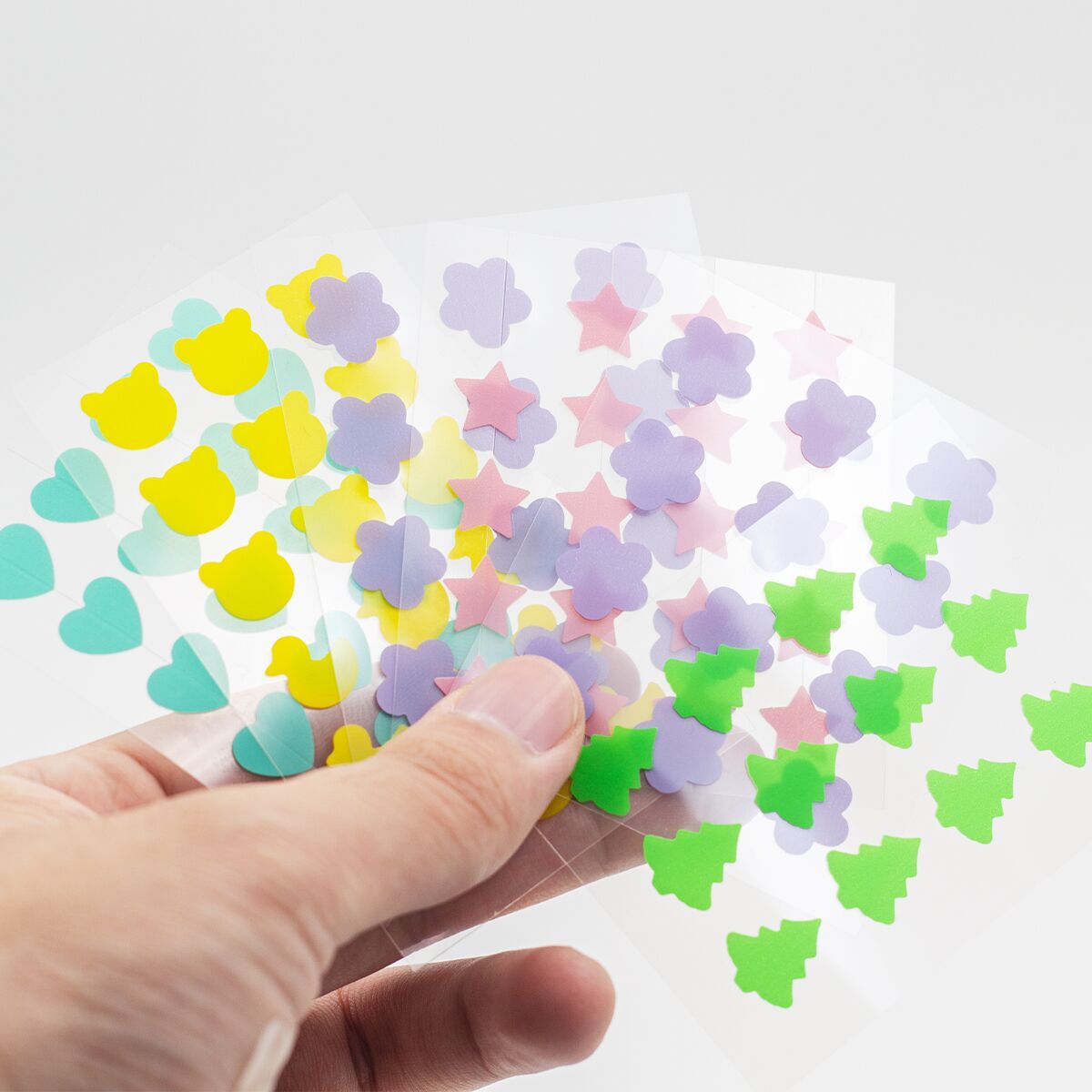
A decorative patch solves the opposite problem to an invisible one. Instead of hiding a blemish, it makes it deliberate — which is why it sells to a different buyer, at a different price, through a different channel.
Understanding why the category exists is the fastest route to designing a range that sells. It is not a novelty version of a hydrocolloid patch; it is a different product with a different job.
Why people buy a visible patch
Control of the narrative. A coloured star reads as a choice; a red spot reads as a problem. The patch converts something involuntary into something styled.
Permission to go out. It covers without makeup, which matters most to younger buyers and to anyone photographed.
It is shareable. The product is designed to be seen in a photo, which is a distribution channel an invisible patch does not have.
What decoration adds to the cost
The commercial consequence is that a decorative range multiplies minimums faster than a plain one. Four shapes is four dies and, if each has its own artwork, four print setups — before a single pouch is filled.
The range that works
Three to five shapes in one pack format is the pattern that holds: enough variety for a gift or a subscription, few enough that tooling stays sane. Each shape should read at 12–15 mm, because that is where decorative patches live — an 8 mm star is a dot.
Colour is the other lever. A single-colour patch in a strong hue photographs better than a four-colour design that muddies at small size, and it costs less to print. For how print methods behave on a small die, see print method and colour tolerance.
What to watch
- Repurchase. Novelty buys once. A range needs one shape that becomes the everyday favourite, or the second order never comes.
- Claims. A cute patch is still a hydrocolloid product; the decoration does not change what the pack may promise.
- Age framing. The tone that works for teens reads as unserious to a pharmacy buyer — same product, two packs.
How to test a shape before spending on tooling
Cut the shape out of paper at final size and stick it on a face. If it reads at arm’s length in a mirror, it will read as a patch. If you have to look for it, detail is being lost to the die rather than to the print.
The same test answers the second question: whether the shape still looks like a blemish cover or has become jewellery. Both are valid products, but they sit in different parts of a store, and the pack has to match the position.
Send the shapes you have in mind and the channel and we will tell you which ones hold at 12 mm, what tooling they add, and how to keep the range inside one pack format.
See cute patch formats