A Teen Range: Design, Claims and Guardrails
- Share
- Issue Time
- Nov 28,2026
Summary
A teen range is the easiest line to sell and the hardest to defend. What changes in the patch, the claims and the pack when the buyer is seventeen.
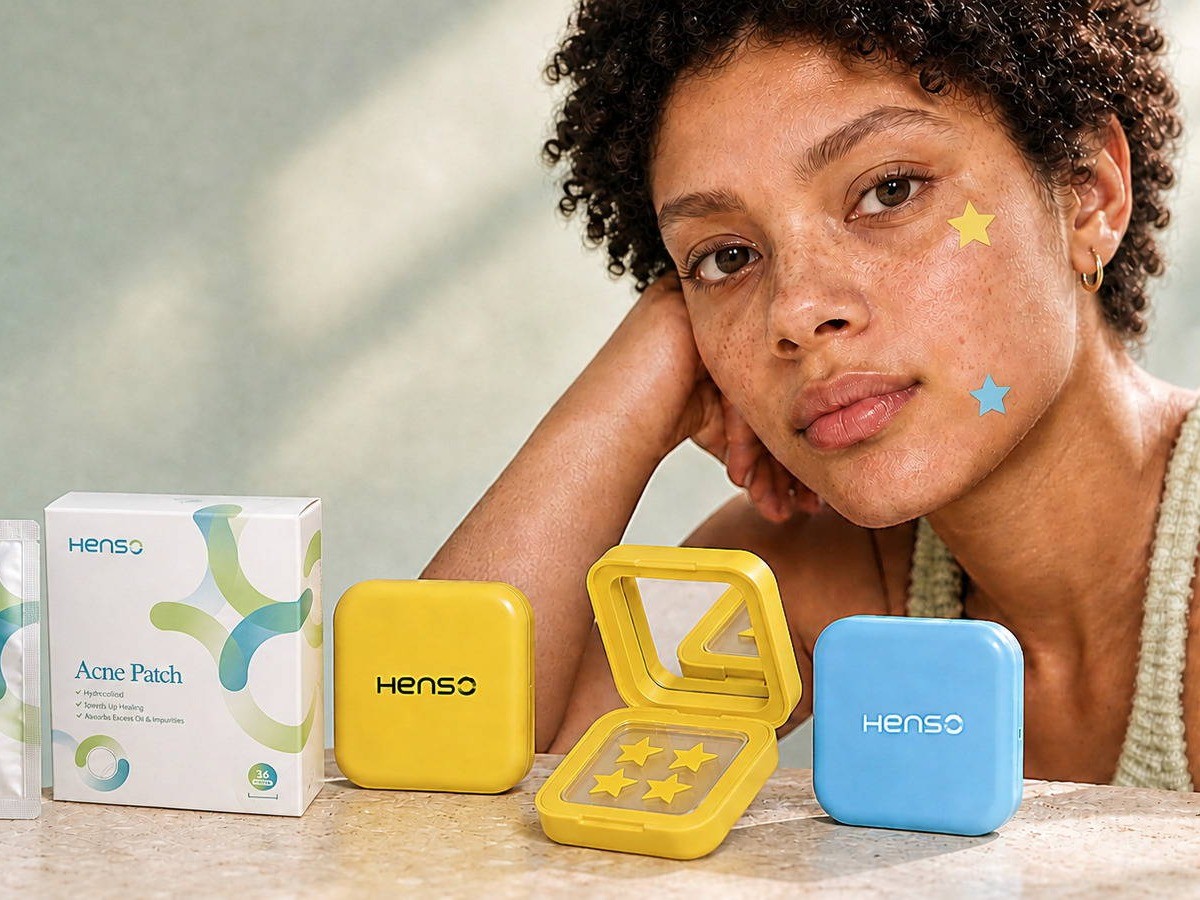
A teen range is the easiest line to sell and the hardest line to defend. The audience buys on look, the parent buys on safety, and the platform hosting the listing enforces a third set of rules that neither of them reads. Get any one of the three wrong and the range stalls after its first reorder.
Most decorative patch programmes start here because the design freedom is obvious: shapes, colours, licensed characters, a compact that clips into a school bag. The part that gets less attention is that a product aimed at minors is judged more strictly than the same product aimed at adults — on the claims it makes, on the imagery it uses, and on how the pack invites a purchase.
Why a teen range is not a repackaged adult range
The patch can be the same construction. What changes is everything around it: the size on the face, the adhesive that has to survive a school day, the count per pack that matches a weekly habit rather than a monthly one, and the copy that has to be defensible in front of a parent.
| Decision | Adult range | Teen range | Why it changes |
|---|---|---|---|
| Patch diameter | 12–15 mm, spot-sized for a single lesion | 8–10 mm for daytime wear, 12 mm for overnight | Daytime patches are worn in a classroom or on camera; a small patch reads as jewellery, a large one reads as a dressing |
| Count per pack | 24–36 | 36–72, often in two sizes | Use is habitual and social — packs get shared, and a short pack loses the repeat purchase |
| Format | Single pouch or carton | Compact, tin or book-style card with a mirror | Carry format is the product for this audience; it is what gets photographed and posted |
| Copy | Specification and mechanism | Look, wear time, "invisible under makeup" | Benefit-led copy sells the range, but only cosmetic benefit wording is defensible |
The adhesive question is the one that decides whether the range gets reordered. A patch that lifts at the edge after two hours is a refund on a marketplace and a complaint in a classroom. It is worth specifying the peel and shear behaviour for a smaller die-cut rather than inheriting the adult SKU's adhesive — a 8 mm circle has proportionally more edge per unit area than a 15 mm one, and edge lift starts there.
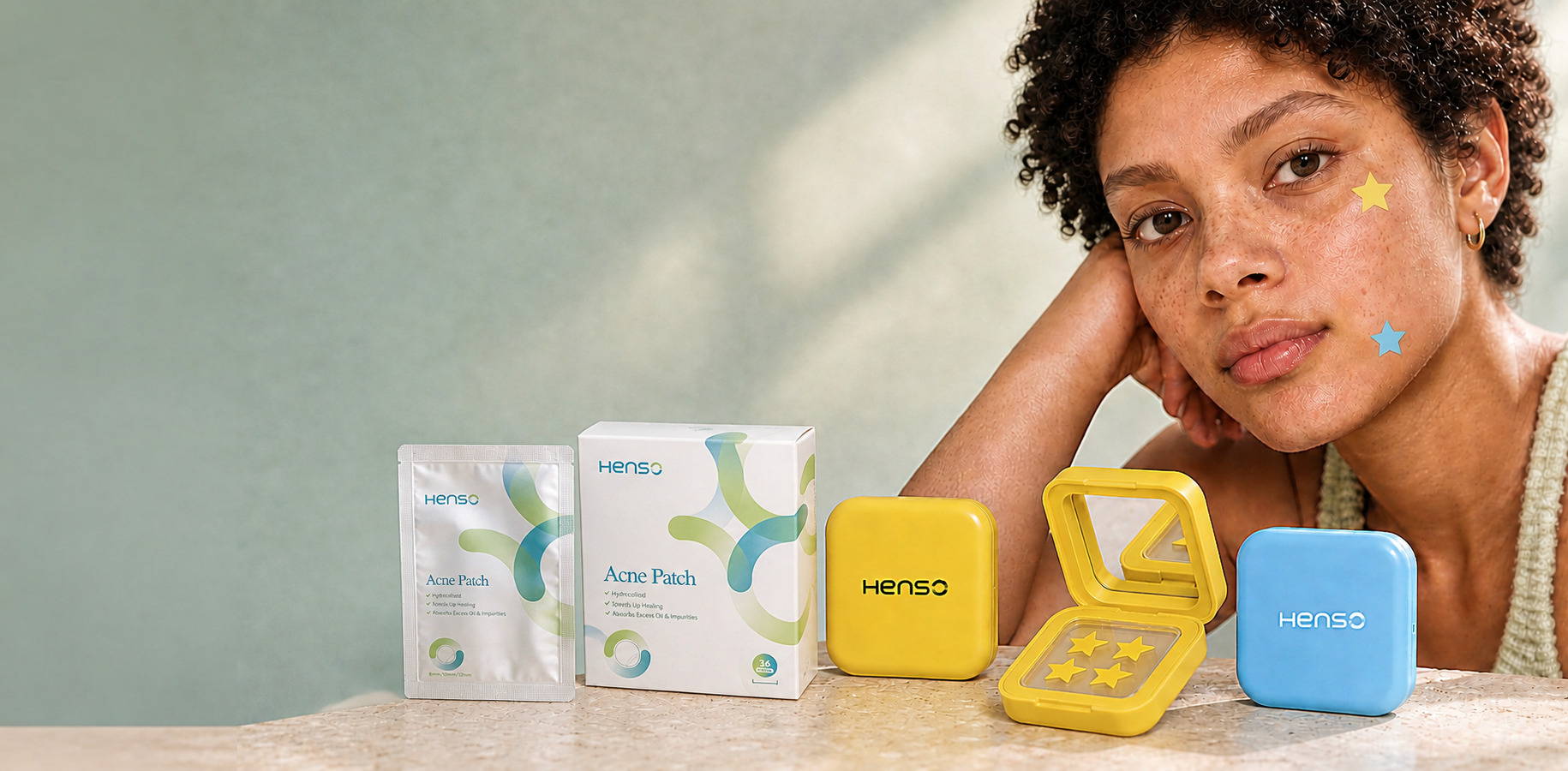
Small patches read as decoration, not as a dressing. The carry format — a coloured compact, a hinged tin, a card with a mirror — is photographed as often as the face, which is why it belongs in the design brief rather than the pack spec.
Claims: the narrow corridor
An acne patch aimed at teenagers can say a great deal about appearance and very little about acne itself. The distinction is not stylistic. In the United States, a claim to treat or prevent acne moves the product into drug territory; in the EU and UK, a claim to treat a condition pushes it toward a medicinal product or a medical device. Both are entirely different routes from a cosmetic label.
| Wording | Status | Why |
|---|---|---|
| "Covers blemishes", "helps conceal redness", "absorbs exudate" | Cosmetic — usable | Describes appearance and physical action, not treatment of a condition |
| "Helps protect the blemish from picking" | Cosmetic — usable, with care | Behavioural benefit; keep it as protection, not prevention of acne |
| "Treats acne", "clears pimples", "prevents breakouts" | Drug in the US; medicinal or device in the EU/UK | A therapeutic claim about a skin condition |
| "Salicylic acid 0.5%" on a teen patch | Drug in the US unless the OTC acne monograph is met in full | An active ingredient with a treatment claim; also changes the EU/UK classification |
Two further rules apply specifically because the audience is young. In the EU, the Unfair Commercial Practices Directive lists a direct exhortation to children to buy — or to persuade an adult to buy for them — as unfair in all circumstances. In the UK, the advertising codes add restrictions on how products are presented to children, including pressure to collect a series. Neither rule bans a teen range; both constrain the copy that goes on the pack and in the listing.
The packaging test that matters: can a parent read the front of the pack and understand what the product does, without the word "acne" appearing as a treatment claim? If the answer requires a footnote, the claim is doing too much work.
Copy sits on a scale, not in a yes-or-no list. The further right the wording moves, the more of the pack — and the product's regulatory route — it takes with it.
Where a patch claim sits
Cosmetic — usable
- "Covers blemishes", "helps conceal redness", "absorbs exudate"
- "Helps protect the blemish from picking"
Classification boundary
Drug / medicinal
- "Treats acne", "clears pimples", "prevents breakouts"
- Salicylic acid 0.5% — an active ingredient, so it crosses the line on its own
Copy sits on a scale, not in a yes-or-no list. The further the wording moves down this list, the more of the pack — and the product's regulatory route — it takes with it.
Guardrails that belong in the brief, not the review
Ingredients and allergens
Decorative patches are usually the simplest formula in a range — hydrocolloid, adhesive, maybe a colourant. That simplicity is an advantage: fewer ingredients mean fewer labelling obligations on a small pouch. Where fragrance or botanical extracts are added for the "spa" positioning, the EU regime requires individual fragrance allergens to be declared above a defined threshold, and that declaration has to fit on the same back panel that already carries the responsible person, batch and precautions.
Imagery
Before-and-after photographs of teenage skin carry two risks. In the US, the FTC expects the evidence behind a demonstrated result; in the EU and UK, an image that implies treatment of a condition can change the classification of the product regardless of what the text says. A range that shows the patch on a blemish, rather than the blemish disappearing, stays inside the cosmetic lane and is easier to defend.
Child-appeal versus hazard
Cartoon shapes and bright colours are the point of the range, and they also make the pack look like confectionery to a younger sibling. Warnings on the pack, a closure that is not easily opened by a small child, and a clear "keep out of reach" line are worth specifying at pack stage — retrofitting them after a marketplace complaint is more expensive than printing them now.
Data and promotion
If the range runs a QR code, a club, or a "scan to collect" mechanic, the data rules attach to the audience. In the US, collecting personal information from a child under 13 triggers COPPA obligations; in the UK, the Age Appropriate Design Code applies to services likely to be accessed by children. A QR code that leads to a parent-facing page is a simpler design than one that asks a teenager to register.
A launch checklist for a teen range
- Fix the claim set first. Cosmetic benefit wording, no treatment language, and a written list of what the listing copy is allowed to say.
- Specify two patch sizes. One for daytime wear under makeup, one for overnight — the count split usually decides the pack architecture.
- Test edge lift on the smaller die. Ask for peel and shear data on the actual 8–10 mm cut, not the adult 15 mm one.
- Design the back panel for the strictest market you intend to enter. If the EU is on the roadmap, reserve the eight particulars now.
- Keep the imagery about coverage, not cure. Show the patch on the blemish, and keep before-and-after out of the primary assets.
- Decide the carry format early. A compact changes the fill, the count and the retail price point; it is not a late packaging choice.
None of these slows a launch. They change the order in which decisions are made — claims before copy, die-cut before adhesive, market list before artwork. Ranges that skip that order tend to come back for a second artwork round at the worst possible moment: after the listing is live.
Building a teen or gift range?
We produce custom shaped acne patches and cute pimple patches in shaped and printed formats, with pack formats sized for carry cases and compacts. Tell us the market, the age band and the count split, and we will quote the patch and the pack together.
This article is a working summary for product and marketing teams and is not legal advice. Claims, classification and children's marketing rules should be confirmed for each market before a range launches.